

Flowing Moments
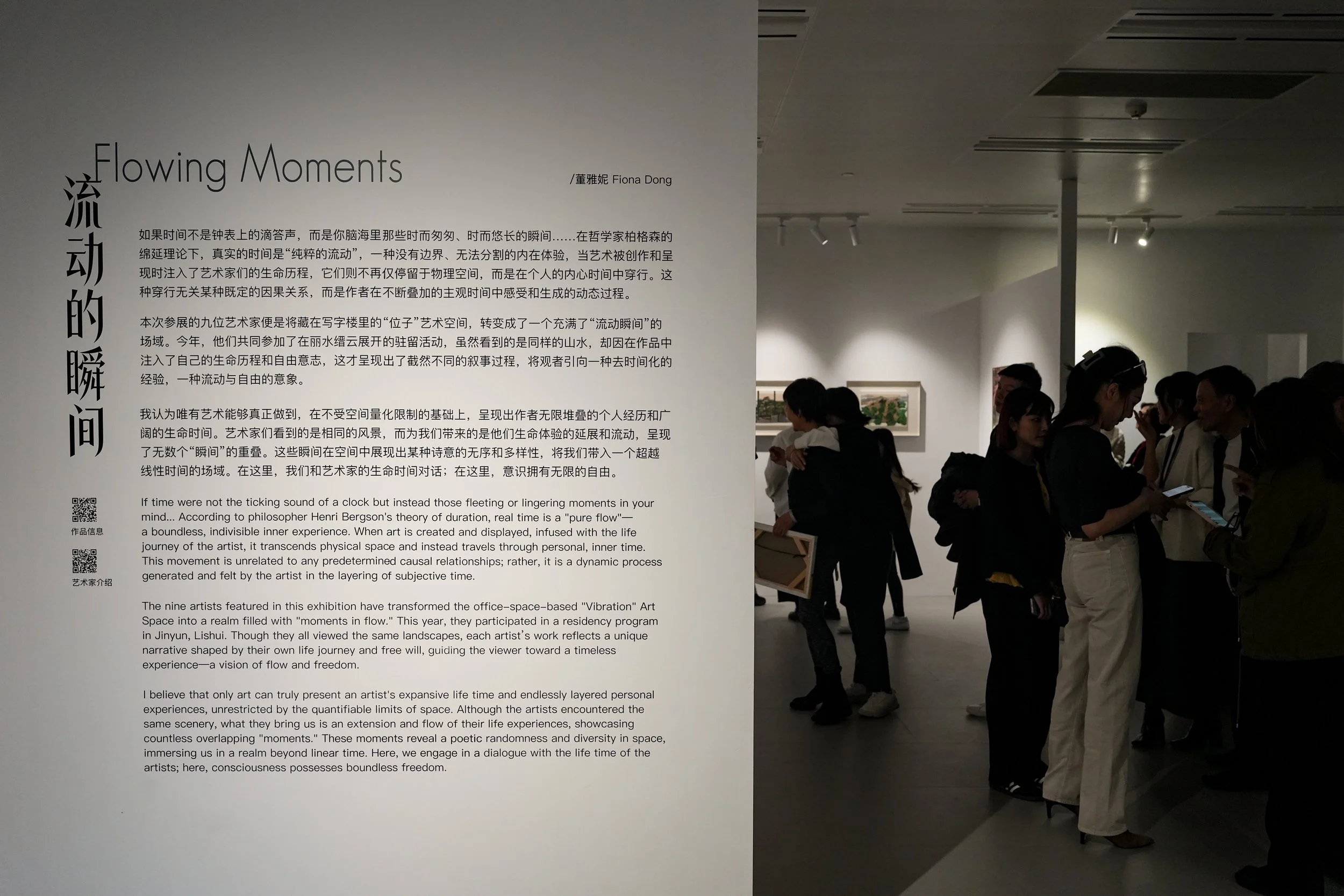
If time were not the ticking of a clock but the fleeting or lingering moments in the mind, the philosopher Henri Bergson once proposed a similar idea: time cannot truly be measured by seconds and minutes, but is more like a flowing river, a continuous and subjective experience. In his view, real time is a “pure flow,” an inner experience without boundaries or divisions. This understanding of time offers a unique way to think about the relationship between art and space.
Under Bergson’s concept of duration, good art is no longer a static object but a lived experience immersed in the flow of time. When artists infuse their work with the course of their own lives, the work no longer exists solely in physical space but moves through the inner time of both creator and viewer. This movement is not driven by a fixed causal logic but by a dynamic process of feeling and becoming within subjective time. Exhibiting art therefore becomes an act of constructing a field filled with “flowing moments.” The audience experiences not a linear or uniform passage of time but what Bergson called “the duration of moments,” an inward, uncertain flow of time.
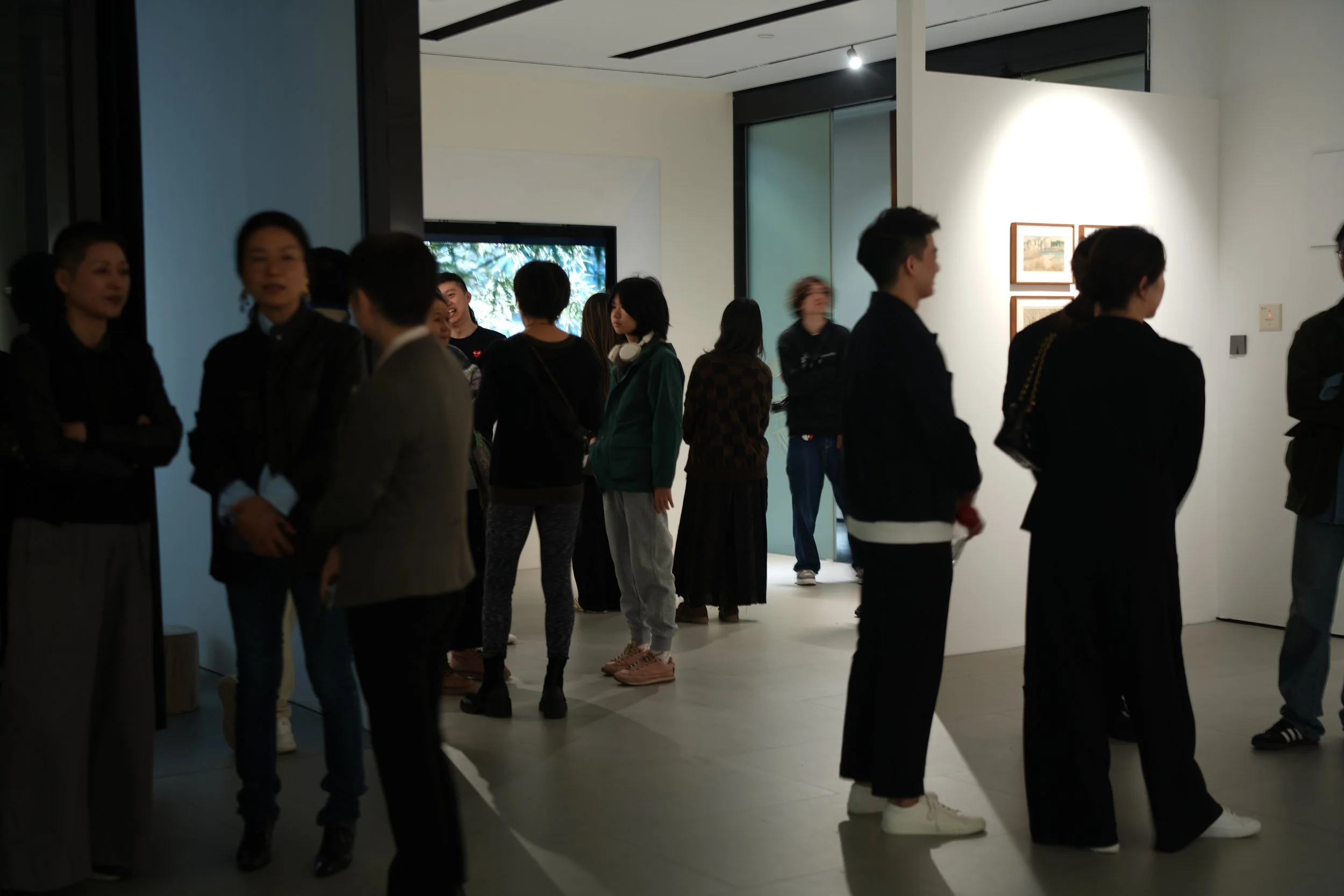
The protagonists of this temporal and spatial unfolding are the nine artists in this exhibition. Born between the 1960s and the 1990s, they come from diverse backgrounds and carry different life experiences, together forming a kind of productive disorder. Earlier this year, they all participated in a residency in Jinyun, Lishui. Though they encountered the same mountains and rivers, each artist brought their own life story and will into their work. In doing so, they transported distinct narratives into the “Weizhi” Art Space hidden within an office building and invited viewers into an experience beyond measured time, an imagery of movement and freedom.
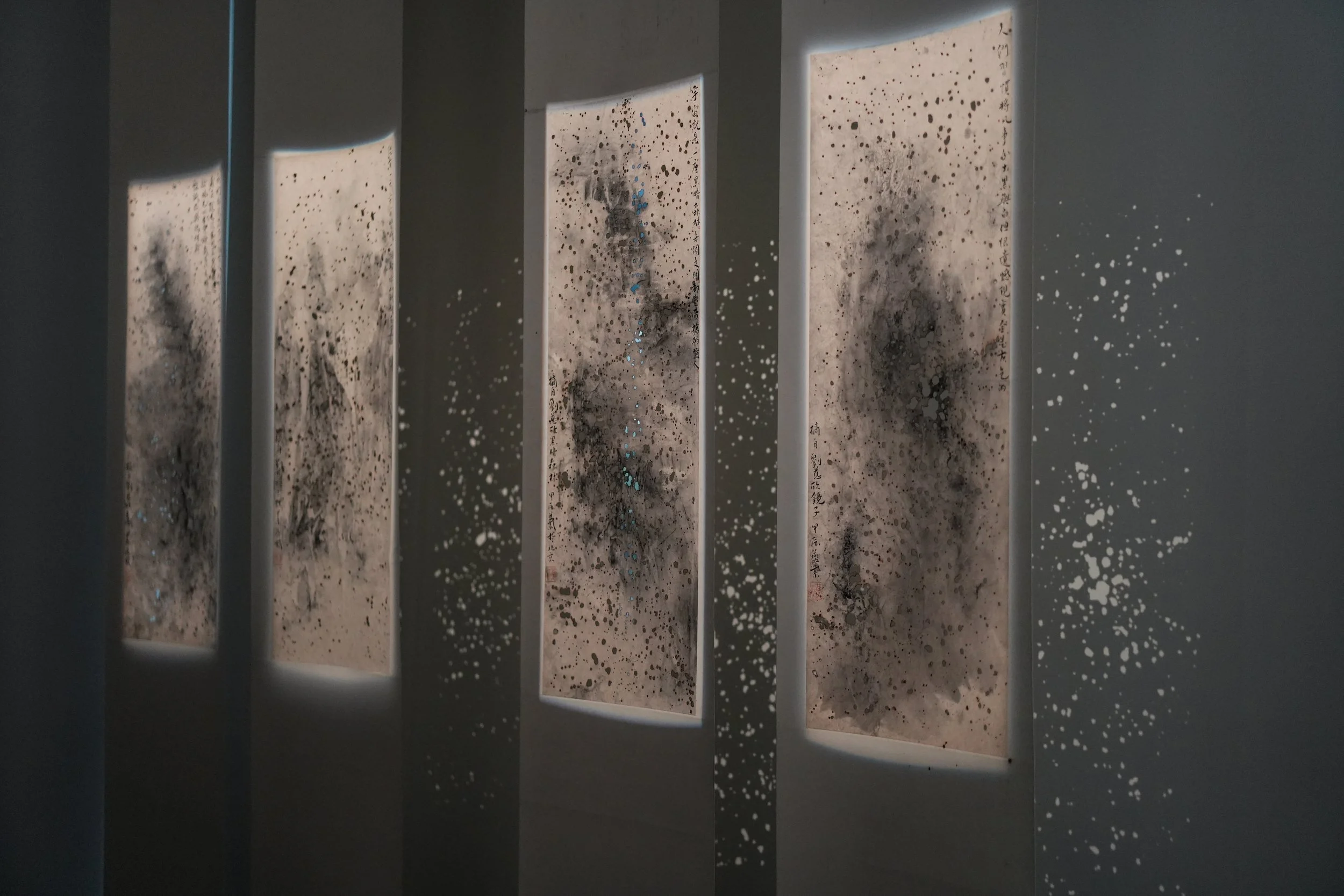
The theater director Krystian Lupa once said, “We must remain faithful to the images of our inner world and to the echoes of the world we imagine, so that it will yield more willingly to our exploration.” To reach such a depth of life experience, one must step out of objective time and enter subjective time. In the works of Chen Xiaodan and Zhang Yanzi, whether in the former’s walls built of flowers and bones or the latter’s scrolls inscribed with sorrowful words and seared “scars,” there is a poetic pain and enduring beauty. Chen constructs a fortress that is also a wall of life. Zhang leaves traces of destruction, yet in those marks she opens slits of light. In their subtle emotions lies a profound reflection, the soft yet penetrating power of the feminine self that dares to move through darkness, coldness, and ruins.
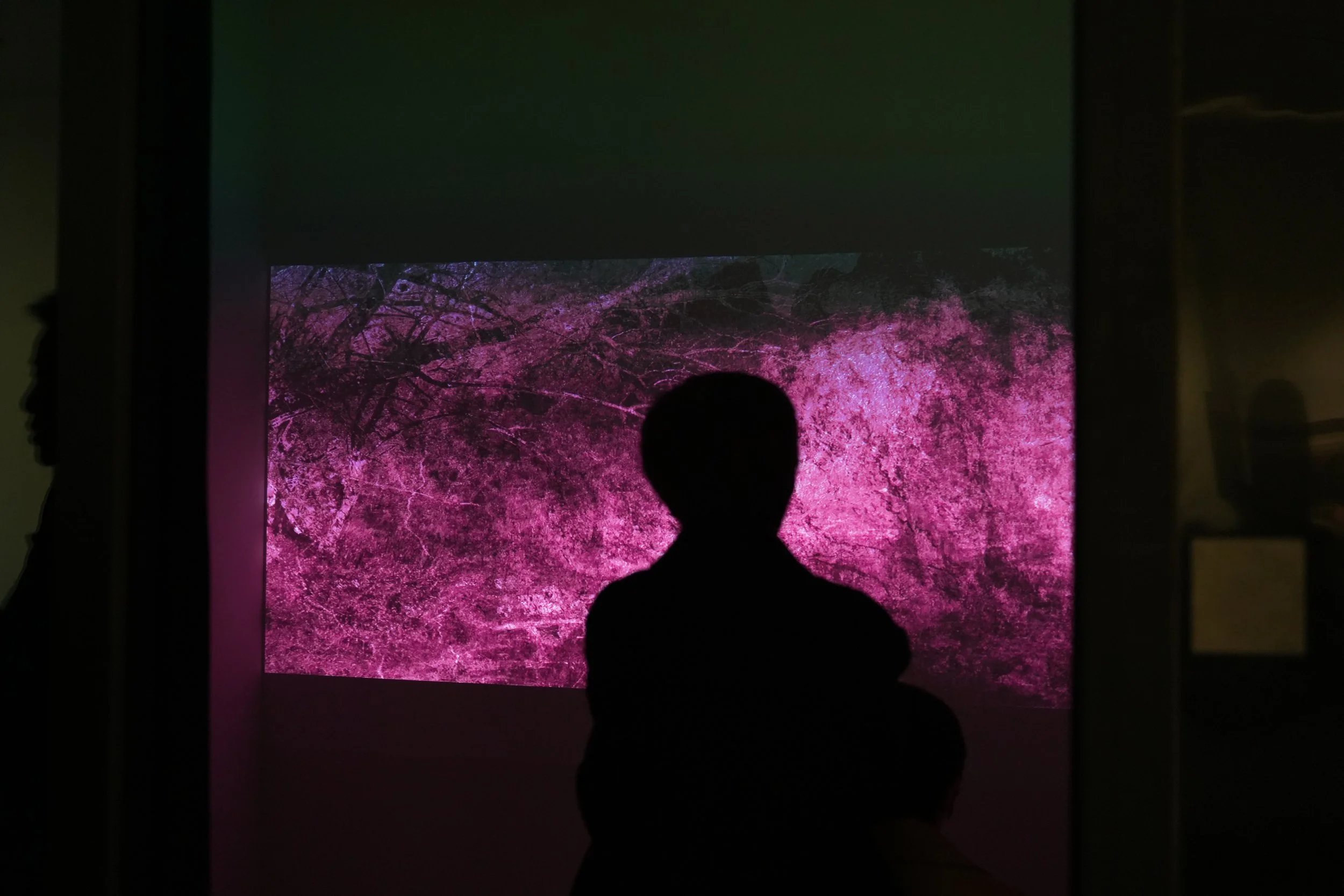
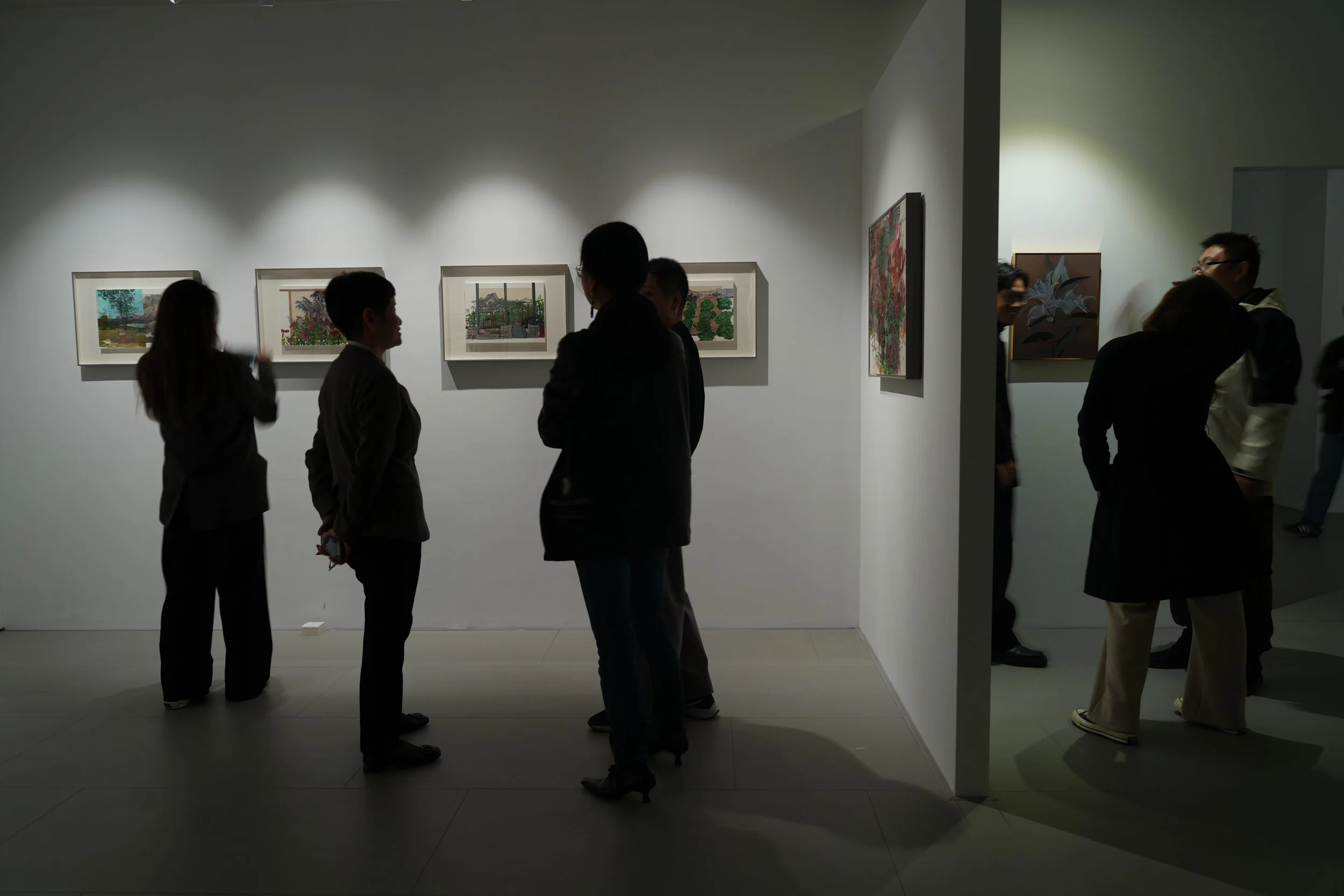
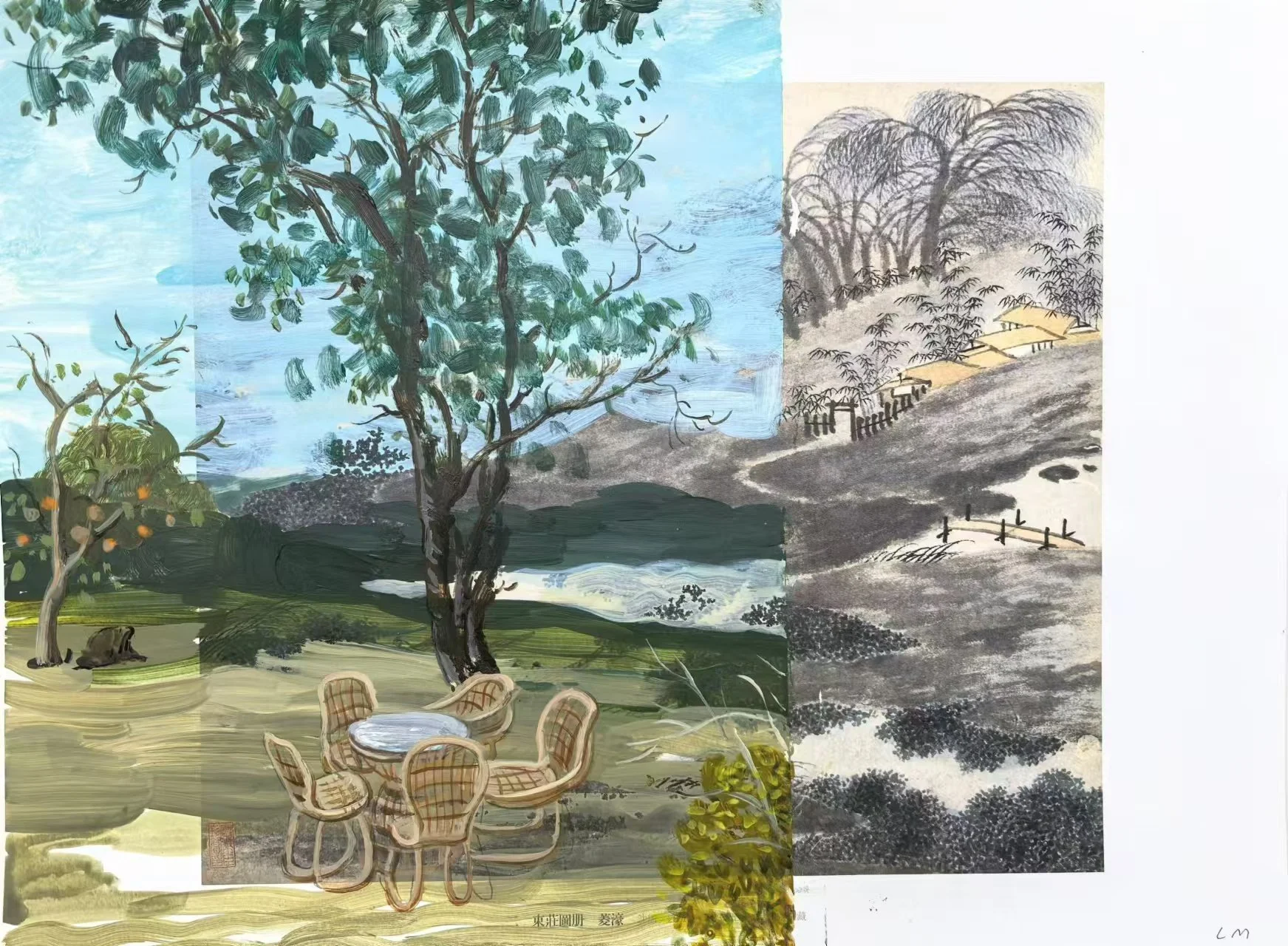
Based on previous understandings of Luo Min’s work, one might expect a similar quiet austerity. Instead, what emerges this time is a bright and agile self-awareness. Her Scenes Near Cloud Village dismantles the traditional framework of Chinese landscape painting through collage, connecting external and internal time with her brush. The result is a vivid and unordered world of ink and color that bridges East and West in her own way. The same dialogue between tradition and modernity unfolds in the collaborative video installation by photographer Alain Julien, artist Luo Yongjin, and digital media artist Yu Tian. Together they bring a constantly shifting narrative process in motion into a closed space, leading viewers into an immersive realm of abstract memory.
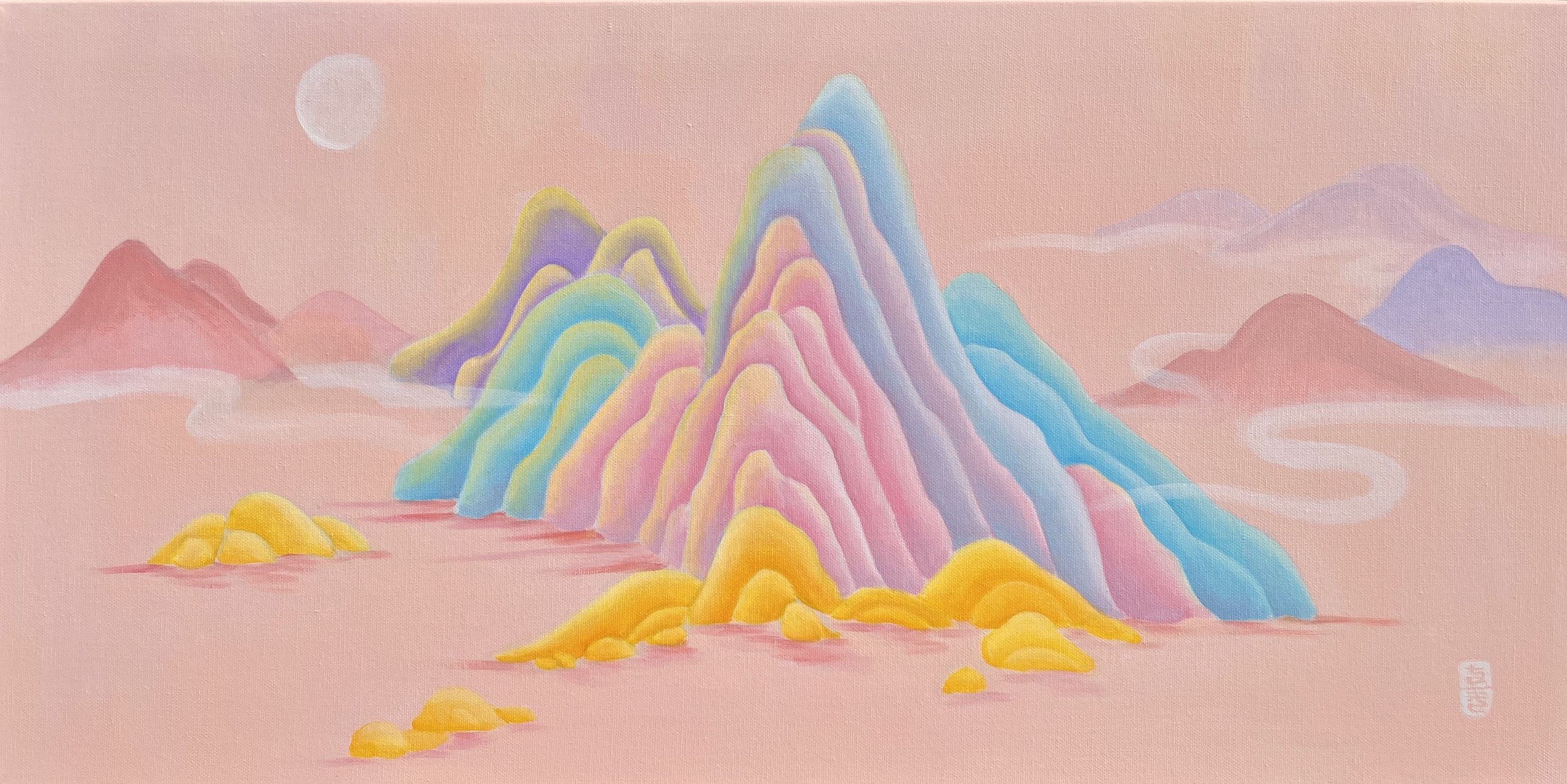
Formalism once argued that the power of art lies in making the familiar unfamiliar. In Ma Qiyi’s layered mountain landscapes, there is a sense of restless spirit. She does not imitate nature but sketches the relation between human spirit and the contour of hills. Her brush never halts at any moment. It runs with the mountains, guided by her will, into a vibrant inner world.
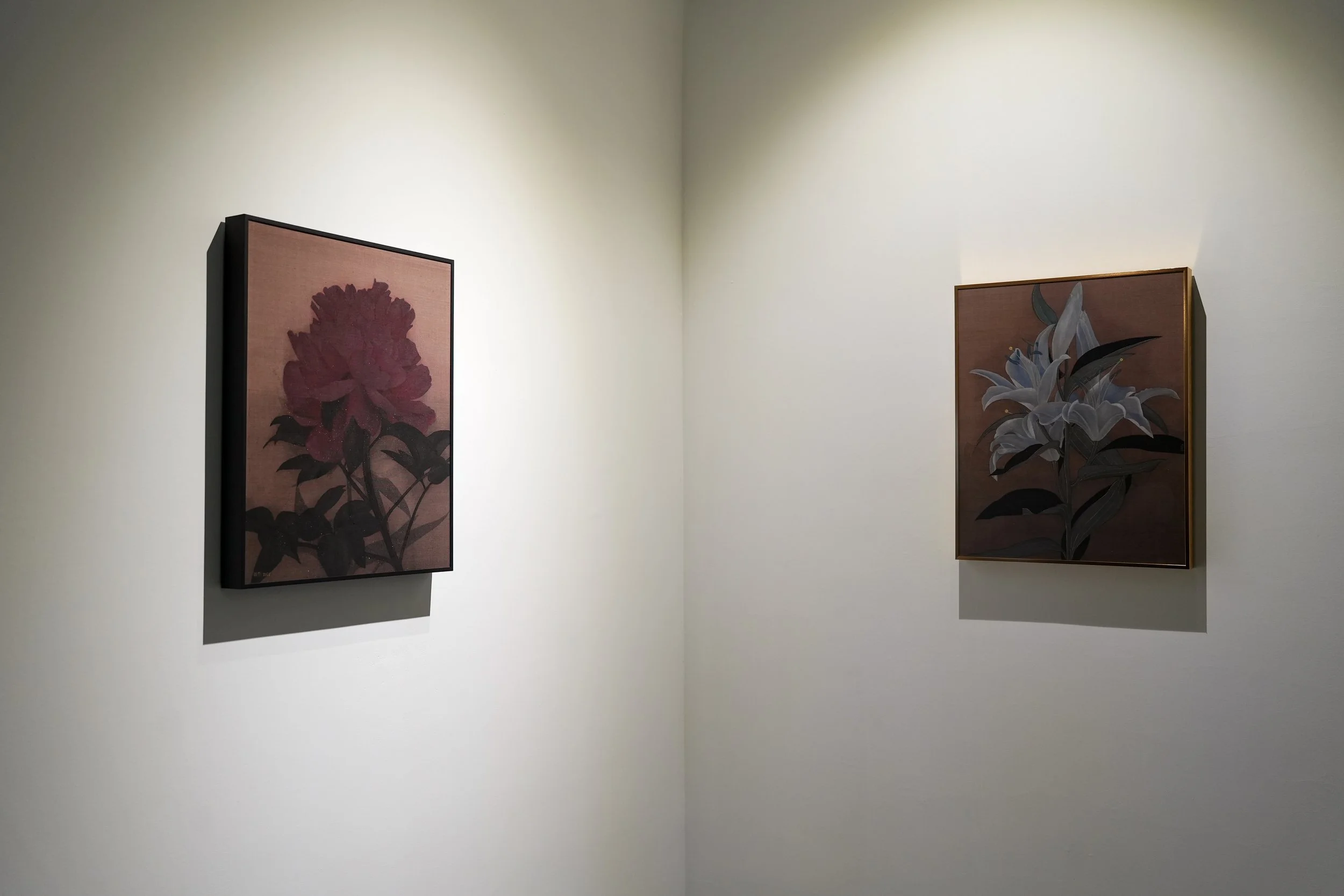
Aesthetic freedom is the purity of spirit untouched by external distractions. Gao Qian’s work embodies this quiet grace and humility. In her meticulous brushwork, a light breeze stirs the pines of Jinyun, and the branches sway like a faint smile. It feels as though heaven and earth are whispering softly, carrying the same serene depth as the artist herself. Likewise, Xie Ai’s use of color on silk parallels Gao’s. Their works flow like two rivers, each reflecting the silent beauty of humanity and nature, yet glowing differently along their banks. Gao’s paintings reveal the fragility and strength of life with tender lines, while Xie’s works exude a deeper, more intense texture, like a lake at dusk rippling with hidden emotion.
Art alone may transcend the quantification of space and embody an artist’s layered experiences and vast sense of life-time. Though these nine artists observed the same landscape, what they present is an extension and movement of their lived time, the overlapping of countless moments. These moments form a poetic field of disorder and diversity, guiding viewers beyond linear time. Within this field, the audience converses with the artists’ lived time, and consciousness finds its freedom.